Avow started in the field.
Hi, I'm Jacob, founder of Avow. Before I built software, I spent years doing the work Avow is designed to support: GIS and geospatial analysis, environmental field investigations, and the federal environmental review that sits behind permits and project approvals.
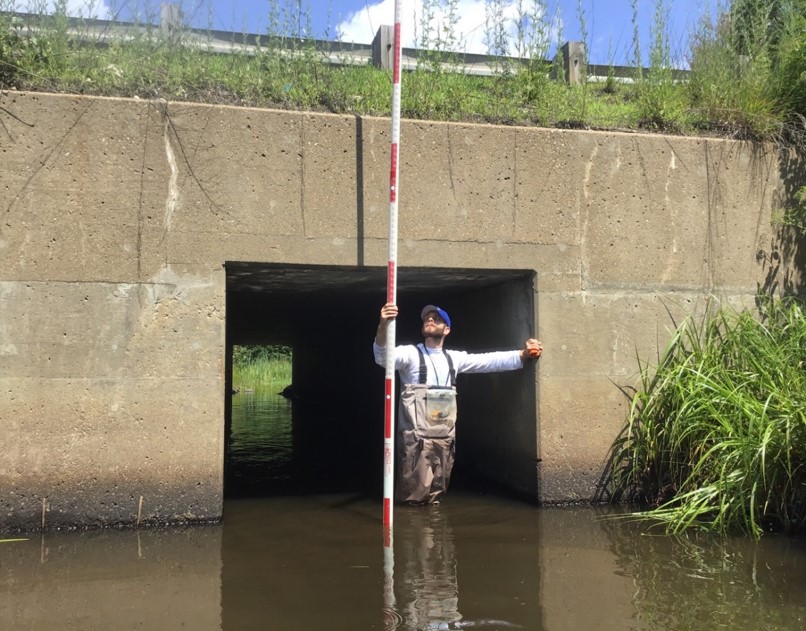
My work moved constantly between maps and field sites. A desktop review might start with wetlands, floodplains, soils, listed species, and federal land records. Days later, I would be standing in a stream with a stadia rod measuring channel depths at a culvert crossing, verifying conditions on the ground. The GIS analysis informed the fieldwork, and the fieldwork informed the permitting decisions. Both were necessary.
What struck me was how much time disappeared before any real analysis could begin.
Every project started with the same routine: downloading wetlands, flood zones, soils, species data, and other federal datasets from multiple agencies; reprojecting them; clipping them to the project area; and confirming that every layer was current. Four to six hours could disappear before I reached the work the client had actually hired me to perform.
Then the regulatory landscape became more complicated. Decisions like Sackett v. EPA reshaped federal wetland jurisdiction. Changes to NEPA implementation altered the framework practitioners relied on. Environmental screening was no longer just about assembling maps. It was about understanding which regulations applied, when they applied, and how those authorities had changed over time.
Avow was built to solve both problems.
It assembles and clips federal environmental datasets for a project area in minutes rather than hours. It also provides an optional screening narrative whose citations are checked against a versioned regulatory corpus, creating a transparent record of the authorities used at the time the screen was generated.
The goal is not to replace professional judgment. Avow is a screening tool, not a jurisdictional determination, permit decision, or source of legal advice. The consultant, planner, scientist, or regulator remains responsible for reviewing and validating the results.
That distinction is intentional. The most important decisions in environmental review have always required professional expertise, field verification, and judgment. Avow does not replace that work. It removes the repetitive steps that come before it, so practitioners can spend more time on analysis, site conditions, and decision-making.
In other words, it gives you back the first day of every project.
Draw a project area and see what comes back.